

Staghorn fern care
A beginner’s guide to understanding and growing Platycerium.
Your first staghorn? Start here.
Begin with the daily basics, help a new plant settle in, and learn what to watch for as it grows.
01 · The plants
Ferns that grow with character
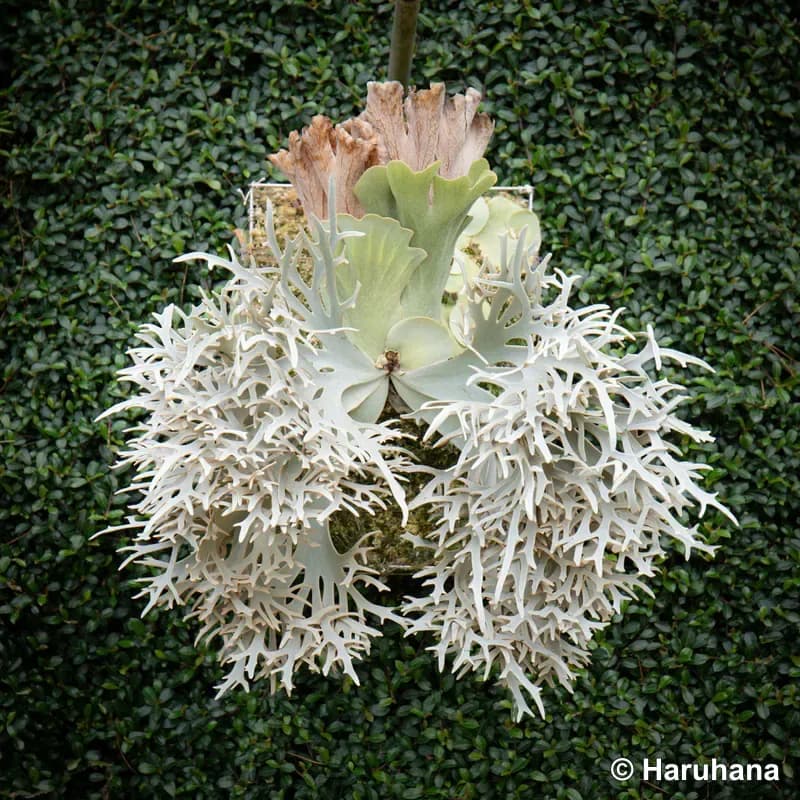
Many Platycerium grow as epiphytes—on trees or other supports rather than rooted in the ground. They use the tree as a place to live, not as food. In cultivation, that natural habit is often recreated with a board, a piece of cork, or a hanging basket.
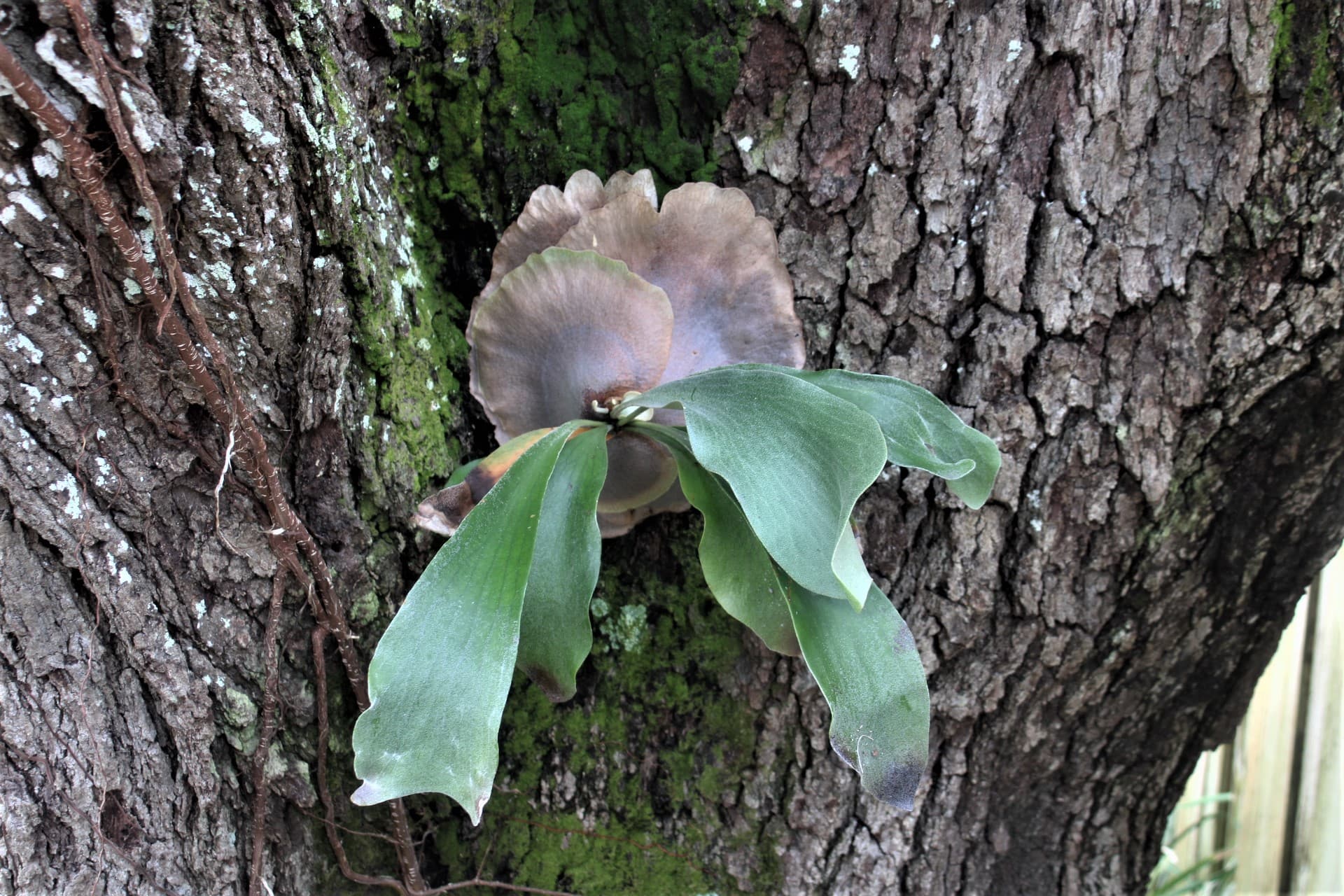
A staghorn fern settled into the fork of a moss-covered tree in Florida.
Photo: Philipp Michel Reichold · CC BY-SA 4.0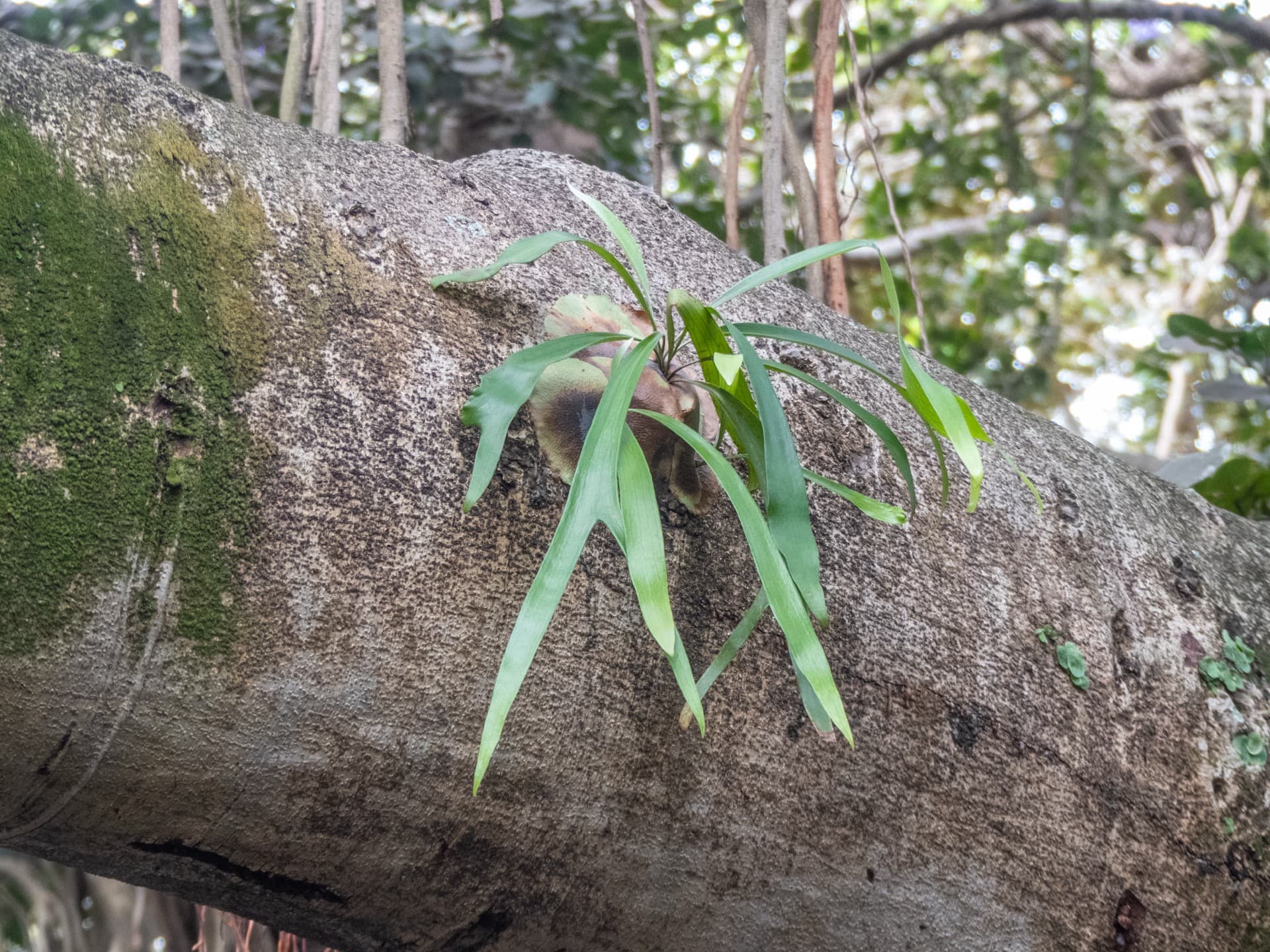
Platycerium bifurcatum growing epiphytically on a Ficus tree at Brisbane's City Botanic Gardens.
Photo: John Robert McPherson · CC BY-SA 4.0“Staghorn fern” is the familiar common name. You may also hear them called “elkhorn ferns.” Platycerium is the botanical genus name used by growers, researchers, and this registry.
02 · Fronds
One plant, two very different forms
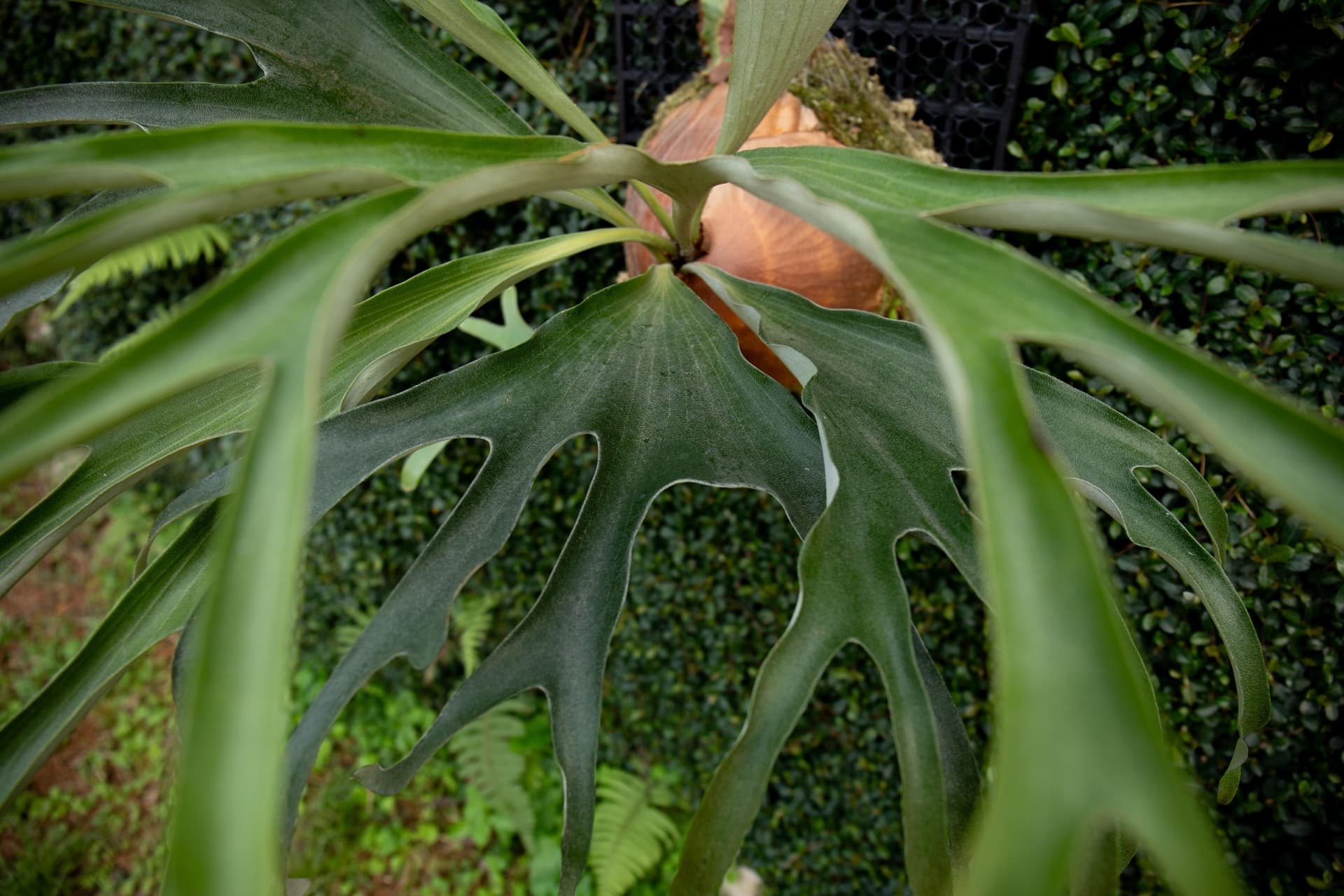
These rounded or overlapping fronds cover the root area and help the plant hold water and fallen organic material. A new shield is usually green. As it ages, it may naturally become tan, brown, and papery.
These grow outward or hang down and create the familiar antler-like silhouette. Their shape can vary dramatically between species and cultivars. Mature fertile fronds may develop brown patches of spores.
Brown does not always mean dead. Older shield fronds are part of the plant's protective structure and are normally left in place. New shields will often grow over them.
03 · Everyday care
Start with light, water, and airflow
There is no single schedule that works for every staghorn. A plant in a warm outdoor garden may dry much faster than one indoors, and a small mount behaves differently from a large established basket. These basics are a useful place to begin.
Bright and filtered
Give the plant plenty of bright, filtered light. If you want to move it into stronger sun, make the change gradually. A sudden jump in light—especially during hot weather—can scorch fronds that have not had time to adjust.
Soak, then observe
Water the root area and mounting material thoroughly, then let the extra water drain. Water again as the mount begins to dry. Check the plant instead of relying on a fixed “once a week” rule.
Humidity needs movement
Many staghorns appreciate humidity, but they also benefit from moving air. A root area that stays wet and stagnant for a long time is very different from the humid, airy conditions around a tree.
Care changes through the year
Warmth, brighter light, and active growth usually make a plant use water more quickly. During cooler or darker periods, the same mount may take much longer to dry.
Feeding
Staghorns can be fed lightly while they are actively growing. More fertilizer is not always better: healthy roots, suitable light, and thoughtful watering matter more. If mineral residue begins collecting on the mount, occasionally water it thoroughly enough to flush the buildup away.
04 · Mounting
A little moisture around the roots, with room to breathe
Staghorns are commonly grown on wood, cork, or in hanging baskets. Mounted plants usually have a small amount of sphagnum moss, coconut coir, or another loose material around the roots. It holds some moisture while still allowing air to reach the root area.
The plant is secured over a small pad of moisture-holding material. As it settles in, new shield fronds spread across the mount and gradually hide the root area and fastenings.
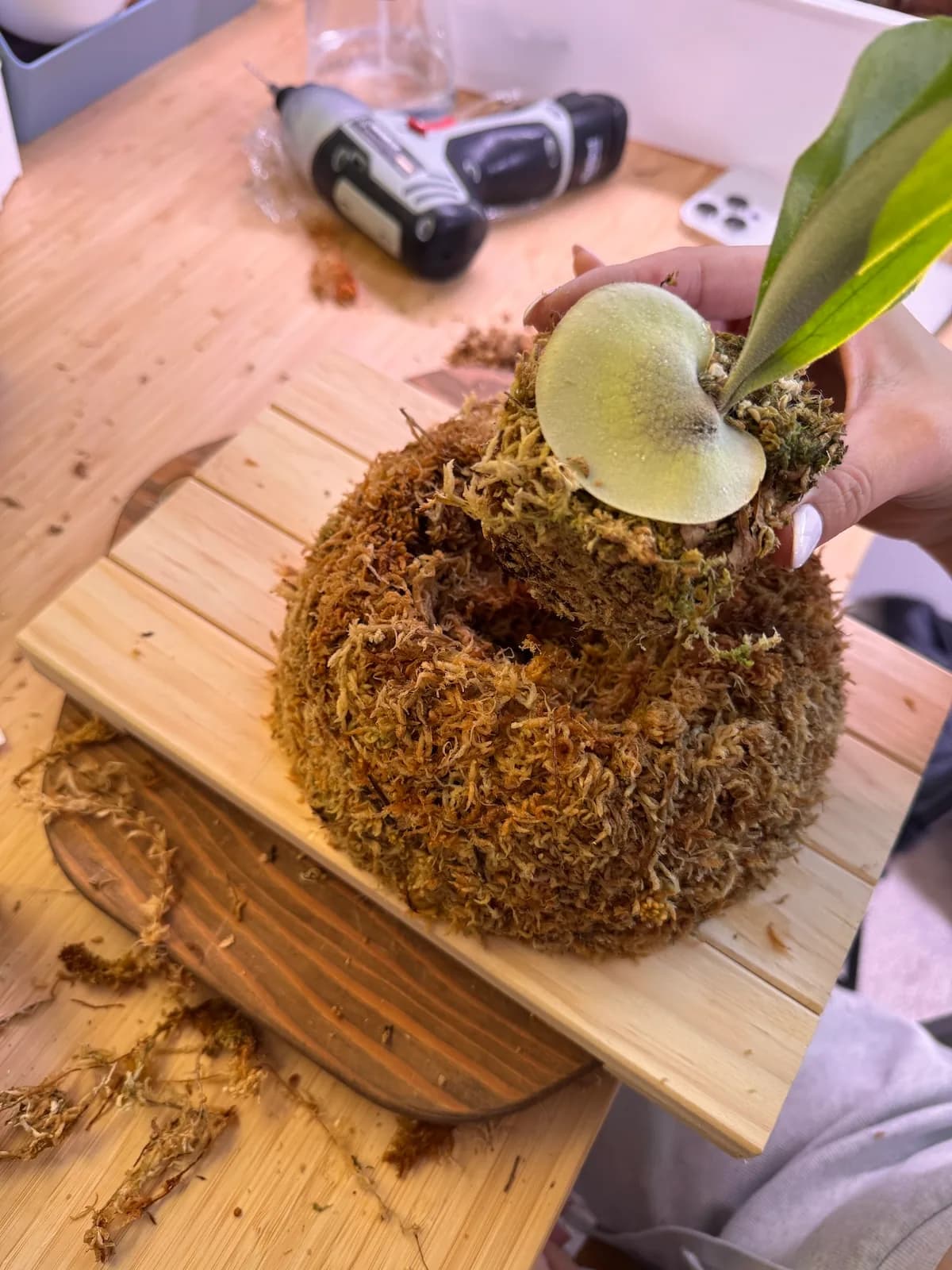
Wire or open baskets may be lined with coconut coir and filled loosely with sphagnum moss or a similar material. Their open structure gives a growing colony room to expand.
Long-fibre sphagnum moss is a good base for a board mount because it holds moisture around the roots. A small amount of coarse coconut husk chips in the core can help maintain air spaces and an open structure. Use washed horticultural husk chips, and keep the moss loose enough to absorb water and drain freely. Adjust the amount of moss to the plant and your growing conditions: the goal is moist, airy roots, not a dense, permanently wet ball.
05 · Observation
Let the plant tell you what is changing
One mark or brown frond rarely tells the whole story. Look at the root area, newest growth, recent weather, and how quickly the mount has been drying. Changes over time are usually more helpful than a single snapshot.
Signs of active growth
Watch for a firm new growth point, fresh green shield fronds, or fertile fronds that steadily expand. New growth may look delicate or fuzzy when it first appears.
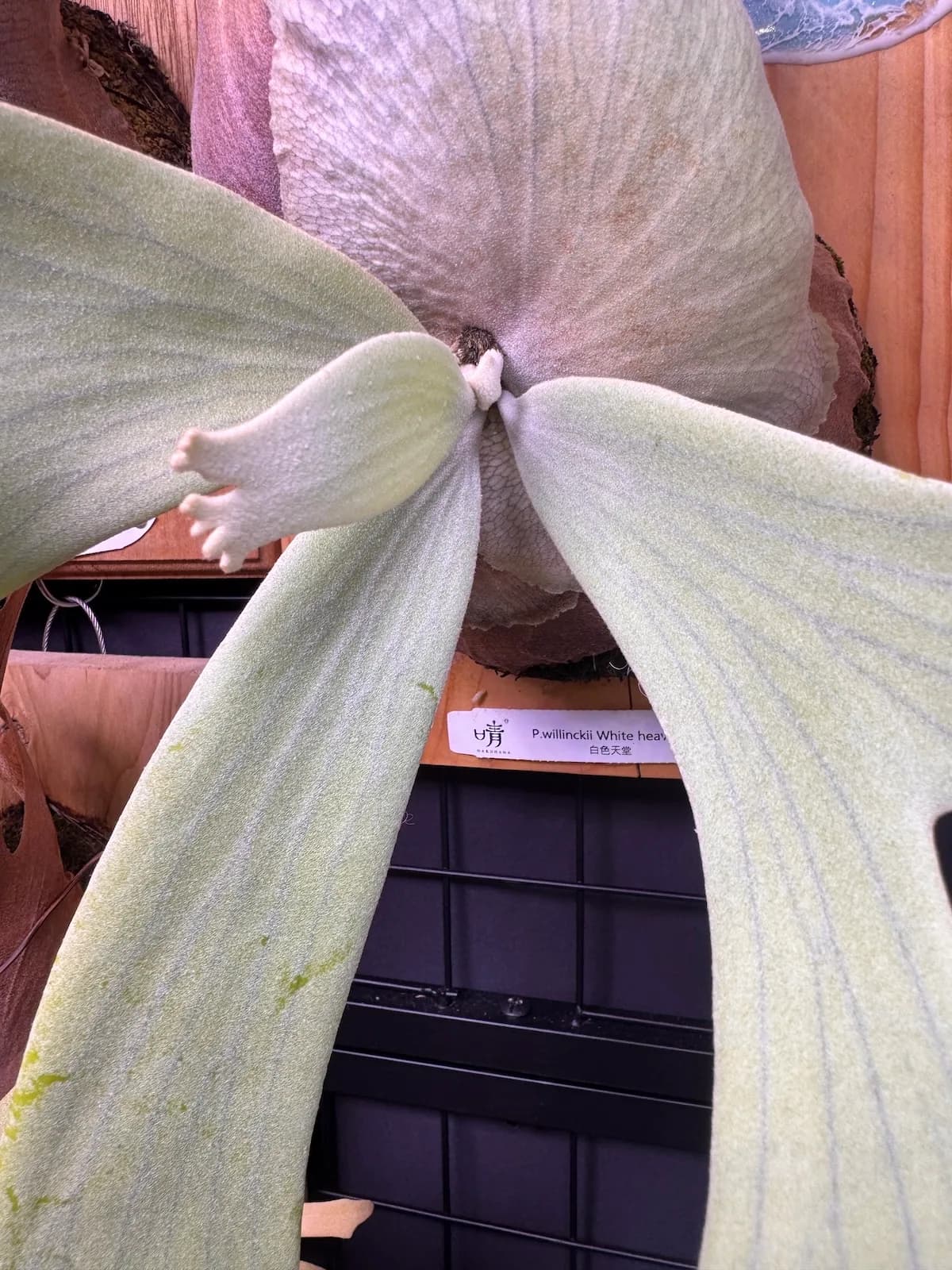
Natural shield browning
A shield that slowly changes from green to tan or brown can be following its normal life cycle. Its position, texture, and the health of new growth help distinguish normal aging from a developing problem.
Light damage
Pale, tan, or crisp areas that appear after a sudden move into stronger sun may be scorch. Damaged tissue may not turn green again, but new growth can still be healthy after the light is adjusted.
Watering problems
A mount that remains saturated for a long time needs a different response from one that dries almost immediately. Softening near the growth point, continuing decline, or roots that never seem to dry are reasons to look more closely at moisture and airflow.
Unwanted visitors
Scale insects and mealybugs can hide along veins, beneath fronds, and around the root area. Check unfamiliar bumps or cottony patches closely before deciding they are a normal part of the plant.
Physical damage
A bent or torn frond does not always mean the whole plant is unhealthy. Protect the growth point and judge recovery by the condition of the next new fronds.
06 · Acclimation
Give a new plant time to settle in
A new staghorn has already experienced a change in light, airflow, temperature, and watering. Learn how it was previously grown when you can, inspect it carefully, and let it adjust before making several major changes at once.
- Look closely.Check the fronds, growth point, and root area for pests or damage.
- Keep some distance.Temporarily separate it from the rest of your collection while you continue watching for pests.
- Choose a steady location.Begin with bright filtered light and airflow rather than the most intense spot available.
- Change one thing at a time.Avoid immediately remounting the plant while also changing its light and watering routine unless there is a clear reason.
07 · Names
Species, hybrids, and selected plants
Species
A naturally occurring kind of Platycerium, such as Platycerium willinckii.
A species can still vary from one population or individual to another.Hybrid
Offspring produced from parents belonging to different species or cultivated lines.
The parentage may be documented, reported, disputed, or unknown.Named selection
A particular cultivated plant chosen and known by a name, such as Jade Girl.
A name does not automatically prove its history or formal cultivar status.Cultivar
A cultivated selection with recognizable characteristics that continue through an appropriate method of propagation.
WPS documents the evidence but does not grant official cultivar registration.08 · Propagation and identity
Not every new plant is the same identity
This is not a propagation tutorial. It is a quick explanation of why the way a plant was reproduced matters when you are reading a cultivar record.
Vegetative offsets generally continue the same clone and selection identity.
Spore-grown plants are genetically new offspring. They can resemble a parent, but they are not automatically entitled to the parent's selection name.
Laboratory propagation is usually intended to reproduce a selected plant, although meaningful variation can sometimes occur.
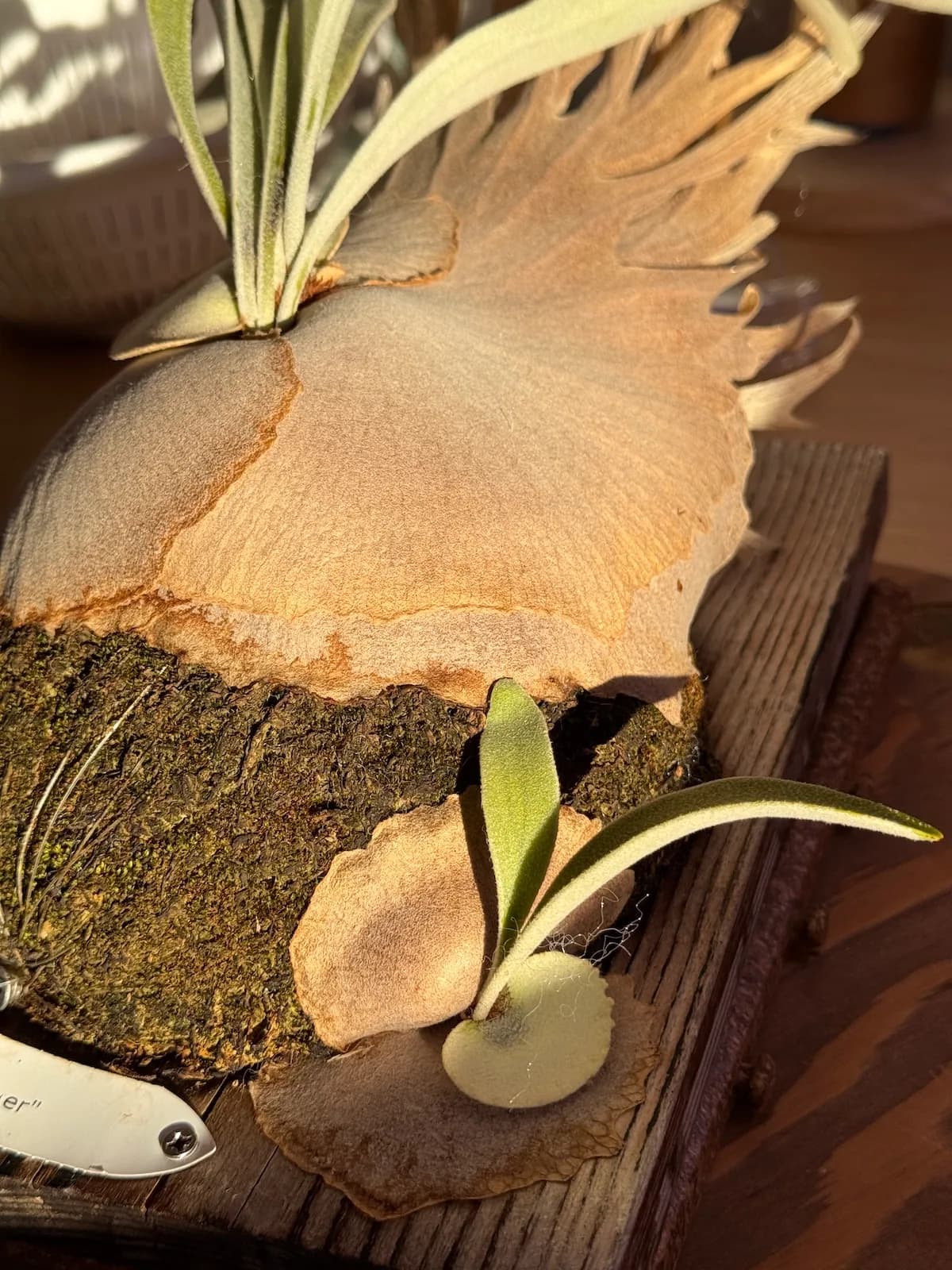
The small offset below the larger plant has its own shield and antler fronds.
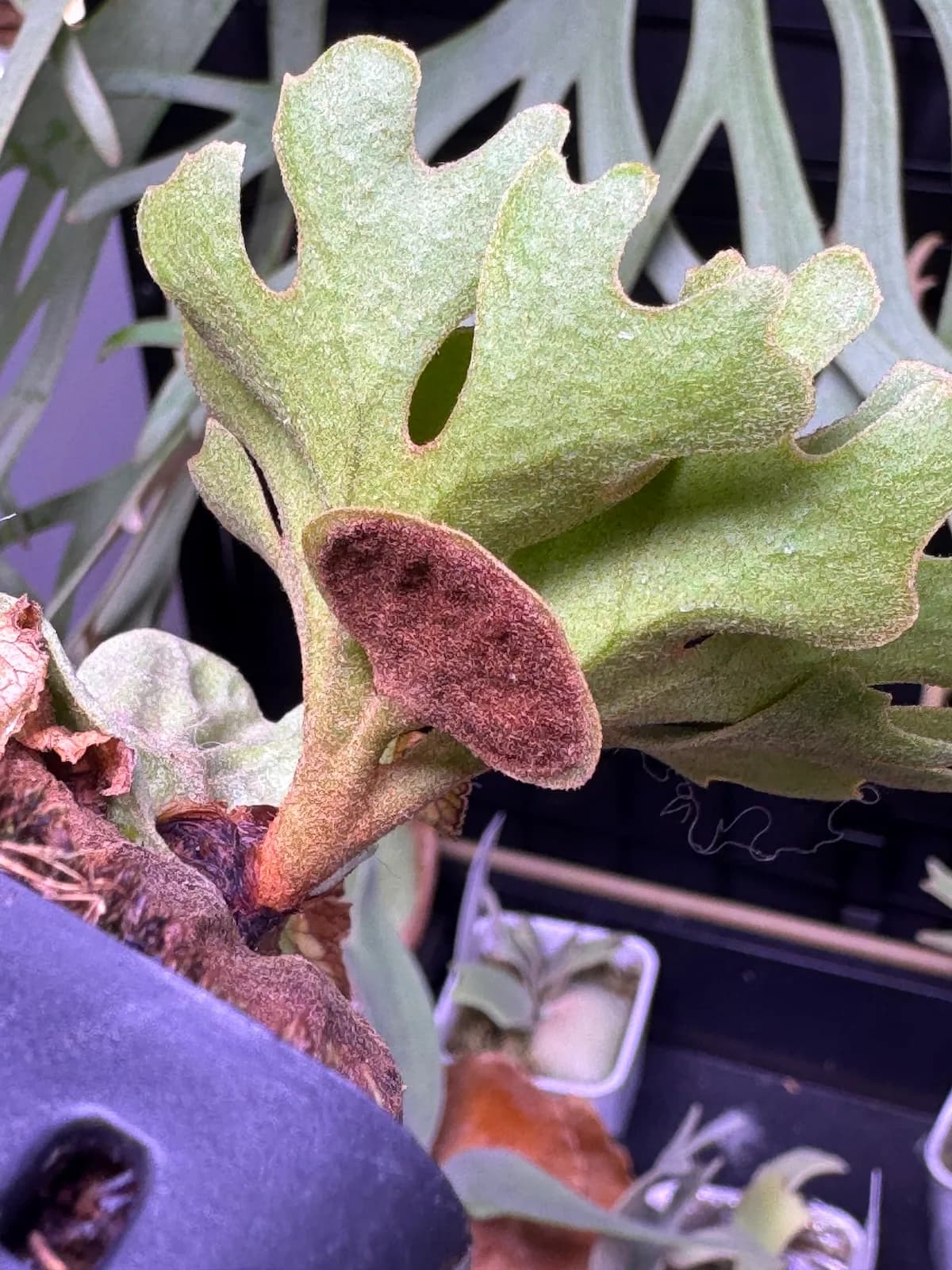
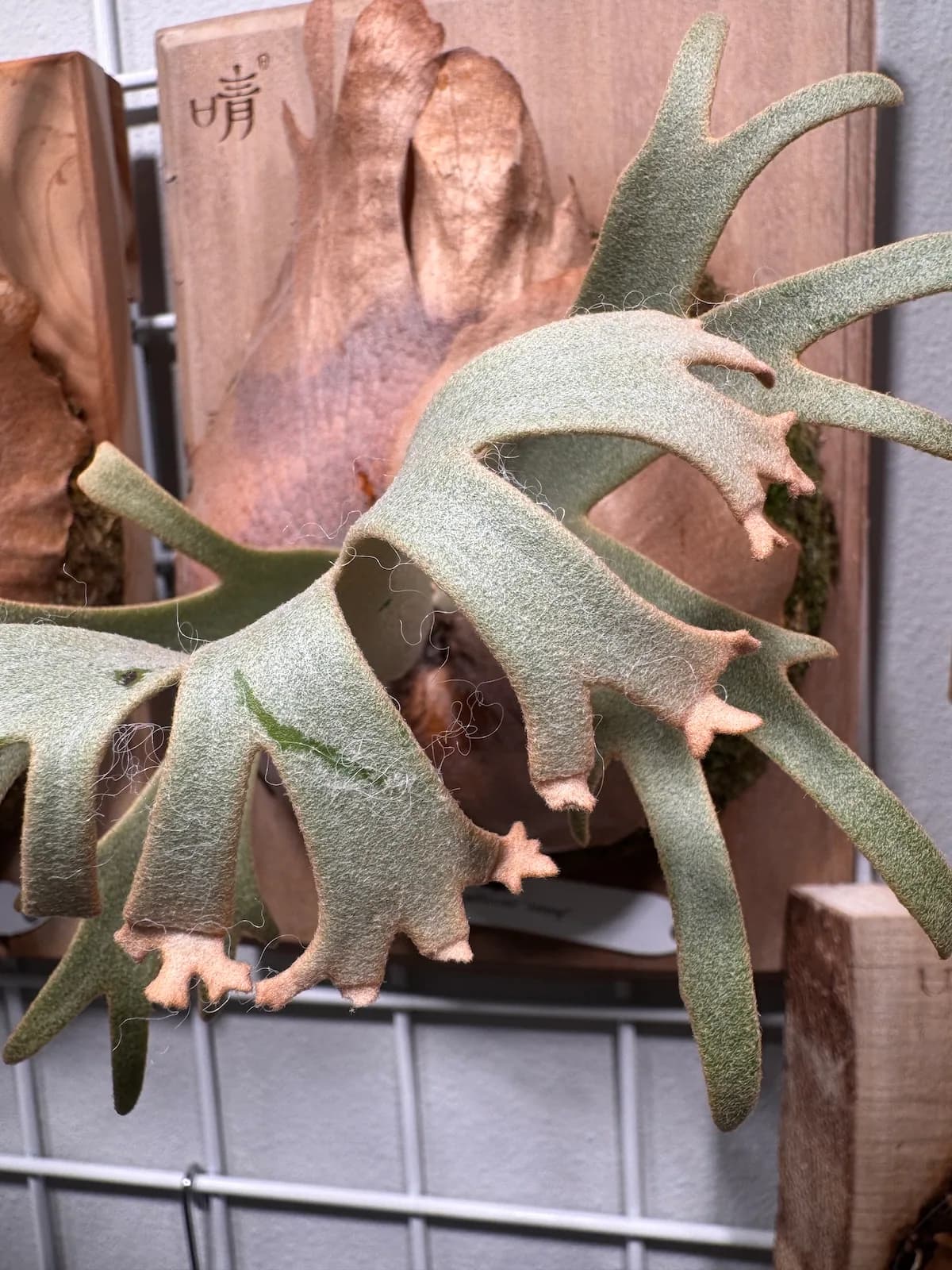
The brown patch on the underside of this fertile frond contains spore-producing structures.
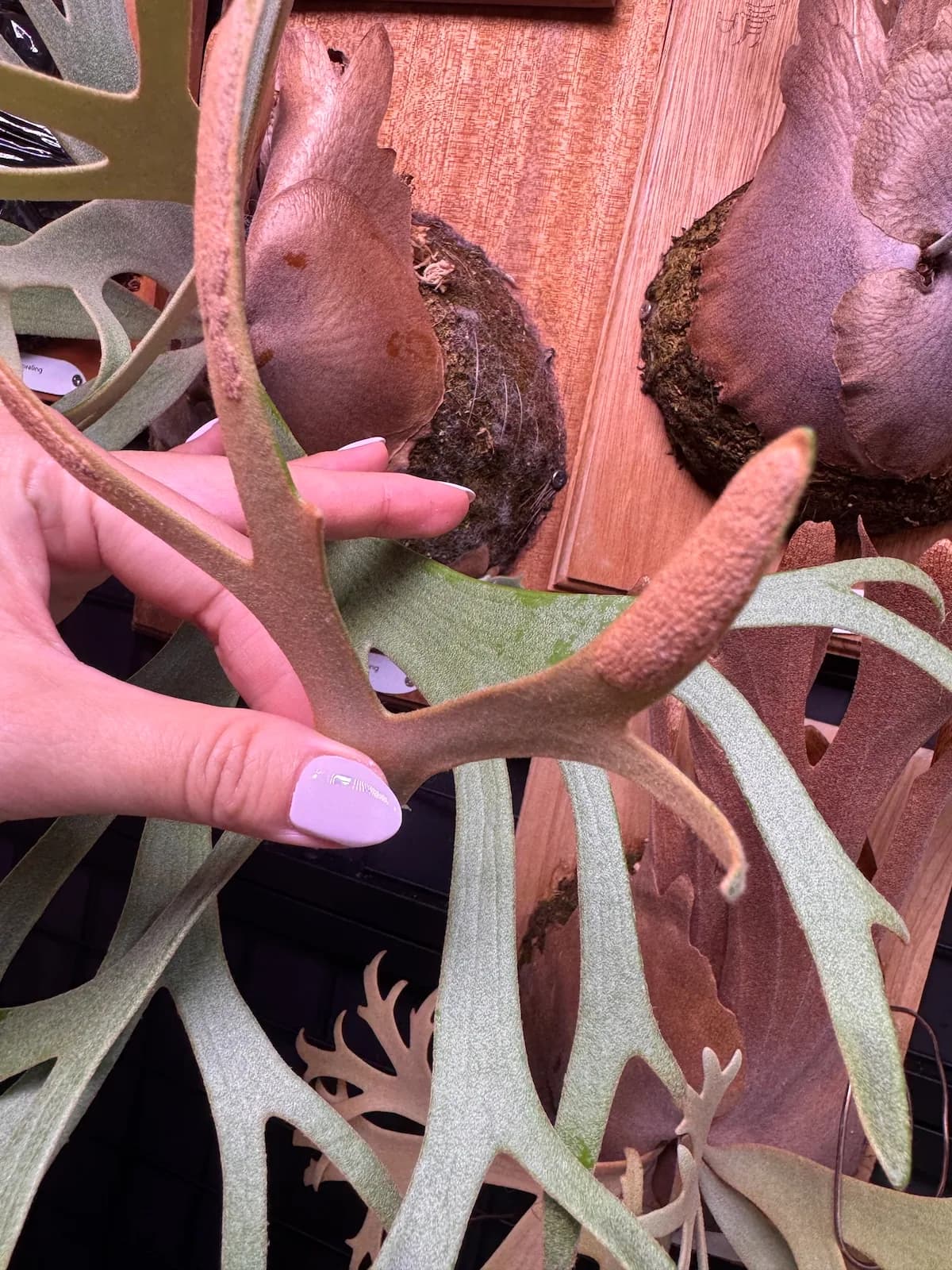
Here, the brown patch extends along a frond tip. Its shape and position differ from the rounded patch beside it.
09 · The registry
Why document these stories?
The same plant may travel through several countries, languages, nurseries, and collections. Names change, spellings drift, and origin stories get repeated without their sources. The World Platycerium Registry connects names, people, lineage, photographs, and evidence so those histories remain understandable.

Care references
These extension, botanical-garden, grower, and growing-medium resources helped inform this guide. The orchid reference covers coconut husk preparation. Use these sources alongside the needs of your plant rather than as instructions for every Platycerium species.
- University of Florida IFAS Extension · Staghorn fern mounting tutorial
- University of Wisconsin–Madison Extension · Staghorn fern overview
- North Carolina State University Extension · Platycerium bifurcatum
- New York Botanical Garden · Mounting staghorn ferns
- LDS² · Staghorn mounting materials and root-zone porosity
- Serendeco · Coconut husk chips and growing-medium structure
- American Orchid Society · Coconut husk preparation